Japandi: pairing solid wood with Japanese minimalism
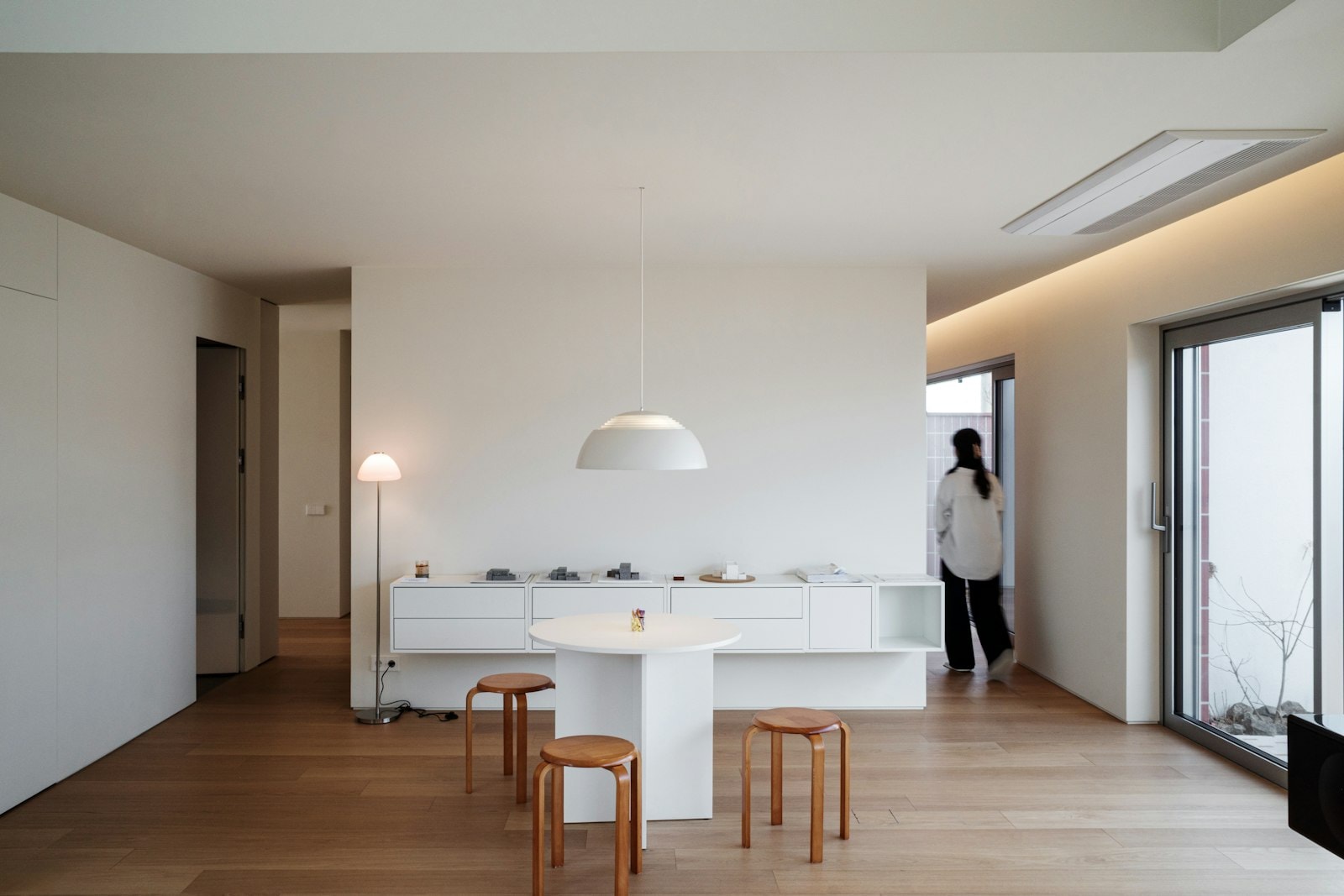
A contraction of “Japan” and “Scandinavian”, japandi is that rare decor trend that doesn't fade — because it isn't really one. It's the meeting of two traditions which, without knowing each other, had reached the same conclusion: few objects, honest materials, forms in service of use.
The kinship is old: as early as the mid-20th century, Danish designers admired Japanese craft, its restraint, its relationship to wood. On the Nordic side, hygge — warm comfort; on the Japanese side, wabi-sabi — the beauty of the imperfect. Japandi lives exactly at their intersection: a warm minimalism, never clinical.
The four principles
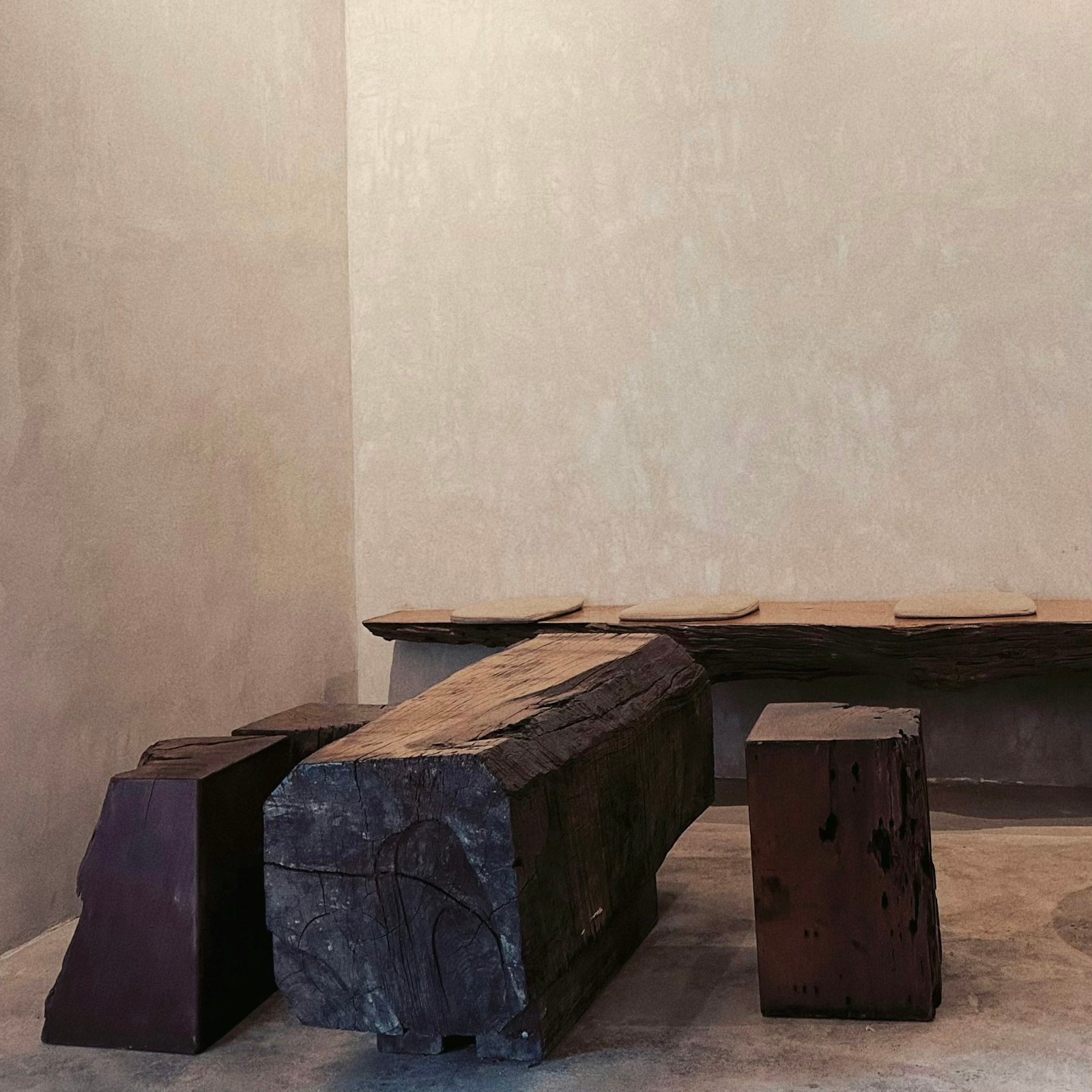
The whole style rests on four choices. Simple, low lines, no gratuitous ornament. Natural materials left visible — wood, linen, ceramic, paper. Fewer objects, but chosen, each earning its place. And imperfection embraced: a knot, an irregular grain, an accidental glaze beat a flawless surface. Wood is its backbone — light for Scandinavian softness, dark for Japanese depth, and nothing forbids marrying both.
“Japandi isn't a style you buy: it's a discipline of the eye.”
Adopting it doesn't mean buying everything new — rather the opposite. Start by removing: what serves nothing, what no longer pleases, what duplicates. Then give the room an anchor in living material. A low, round solid wood form, set by the sofa or under the window, is often enough — TANAH, our circular suar piece, has a japandi silhouette without ever chasing it.
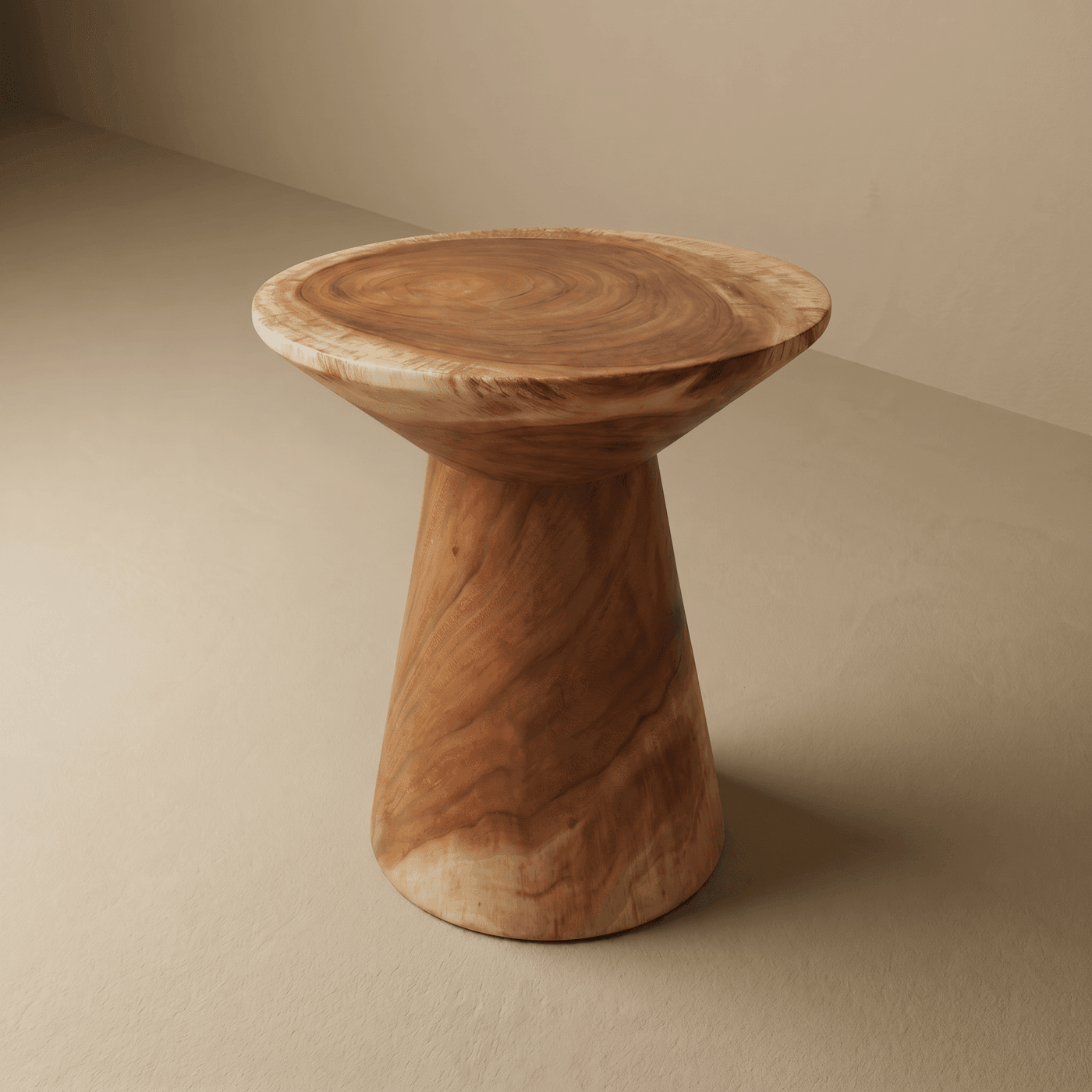
Last advice: don't aim for the showroom. Successful japandi keeps your books, your mismatched ceramics, the patina of what has already lived. It's a frame that showcases your story, not a blank page that erases it. Styles that demand you erase your life never last long.
The solid wood anchor
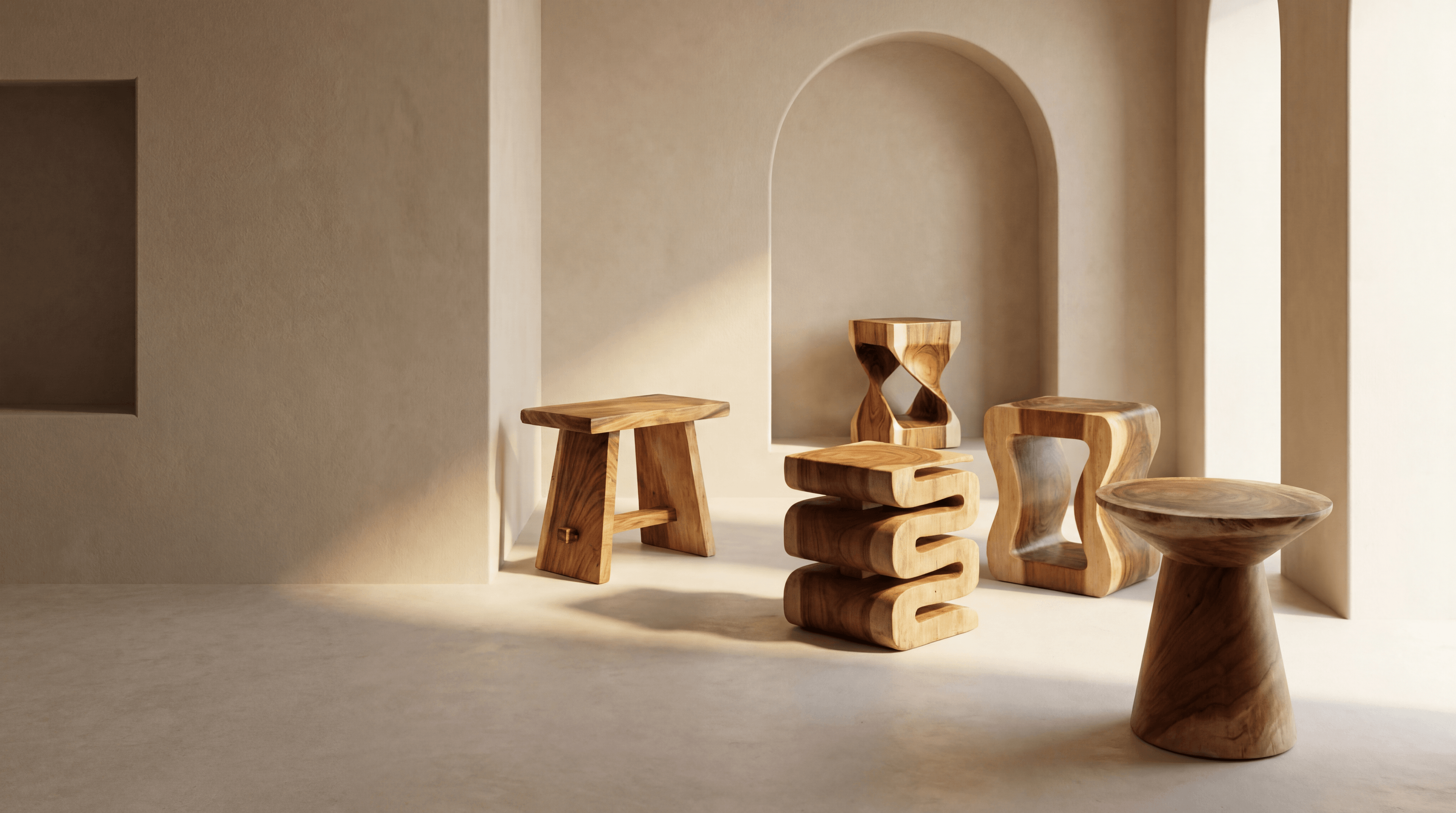
Calm forms, living grain, matte oiled finish: Maison Miraku pieces speak fluent japandi.
Explore the collection