Side table, plant stand, bedside: choosing the right accent piece
It's the piece you never planned for that ends up holding everything: the evening book, the morning cup, the plant that was looking for its spot. The accent piece is the most versatile item in a home — provided you choose it for use, not just for the photo.
First question: height. Next to a sofa, aim a few centimetres below the armrest — setting a glass down should stay natural, no aiming required. As a bedside, line up with the top of the mattress. As a stand, anything goes: the object on top decides, and an unexpected height is precisely what creates rhythm.
Round form or straight line?
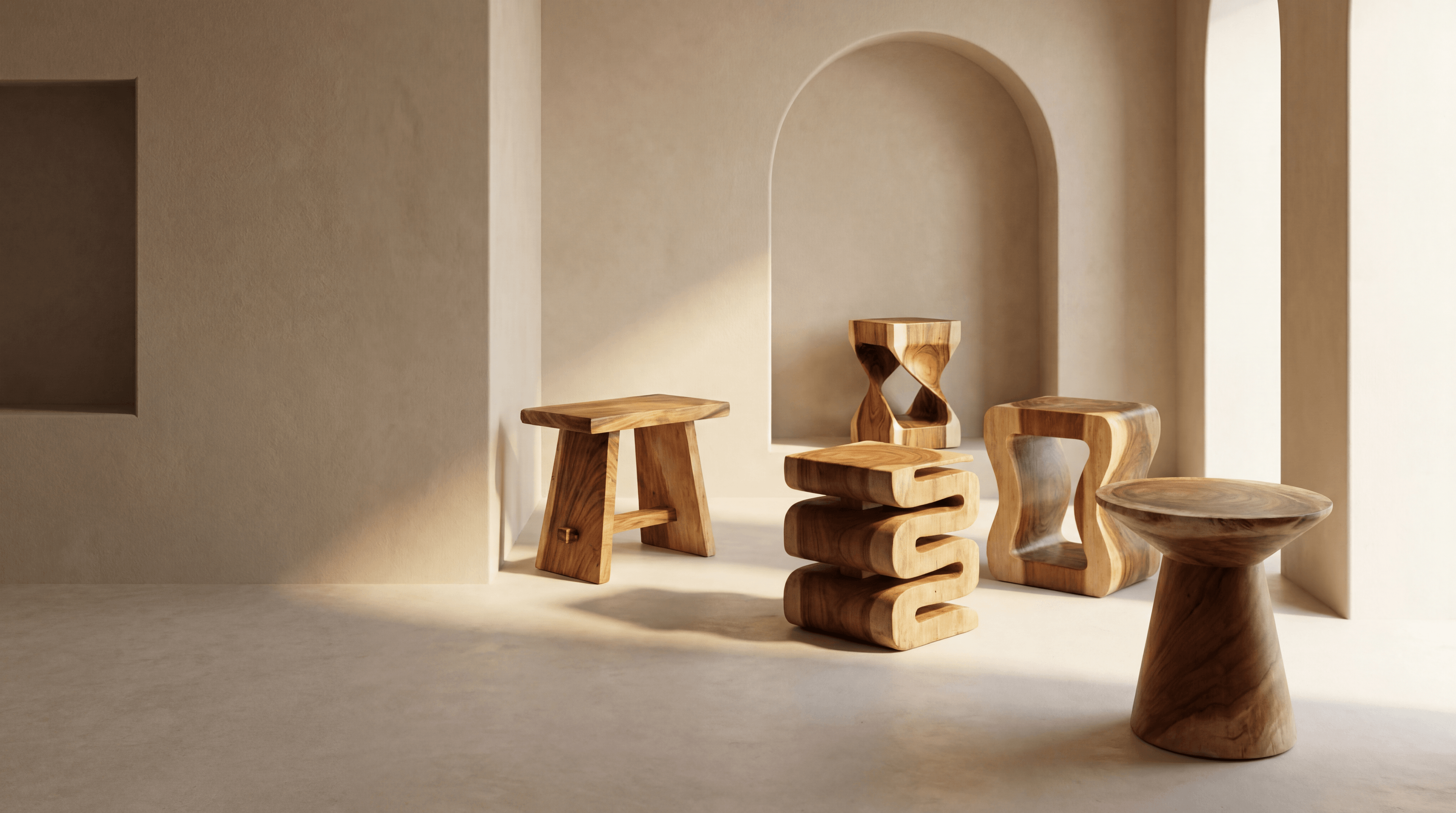
Shape follows traffic. A round top — like TANAH, our circular piece — softens a walkway corner and forgives hurried shins. Straight lines — ASA with its rectangular seat, NAGA with its triple curve, OMBAK with its hollowed heart, WAKTU with its hourglass twist — structure a wall, a hallway, a window's foot. Round to soften, straight to assert.
“A good accent piece doesn't fill a gap: it creates a place.”
Then think nomadic. That's the great quality of a piece carved from the mass: compact enough to follow the life of the house — extra seat when friends overflow the sofa, bedside in winter, plant stand by the window in summer — and heavy enough to be stable anywhere. An accent piece that serves one spot only is half-used.
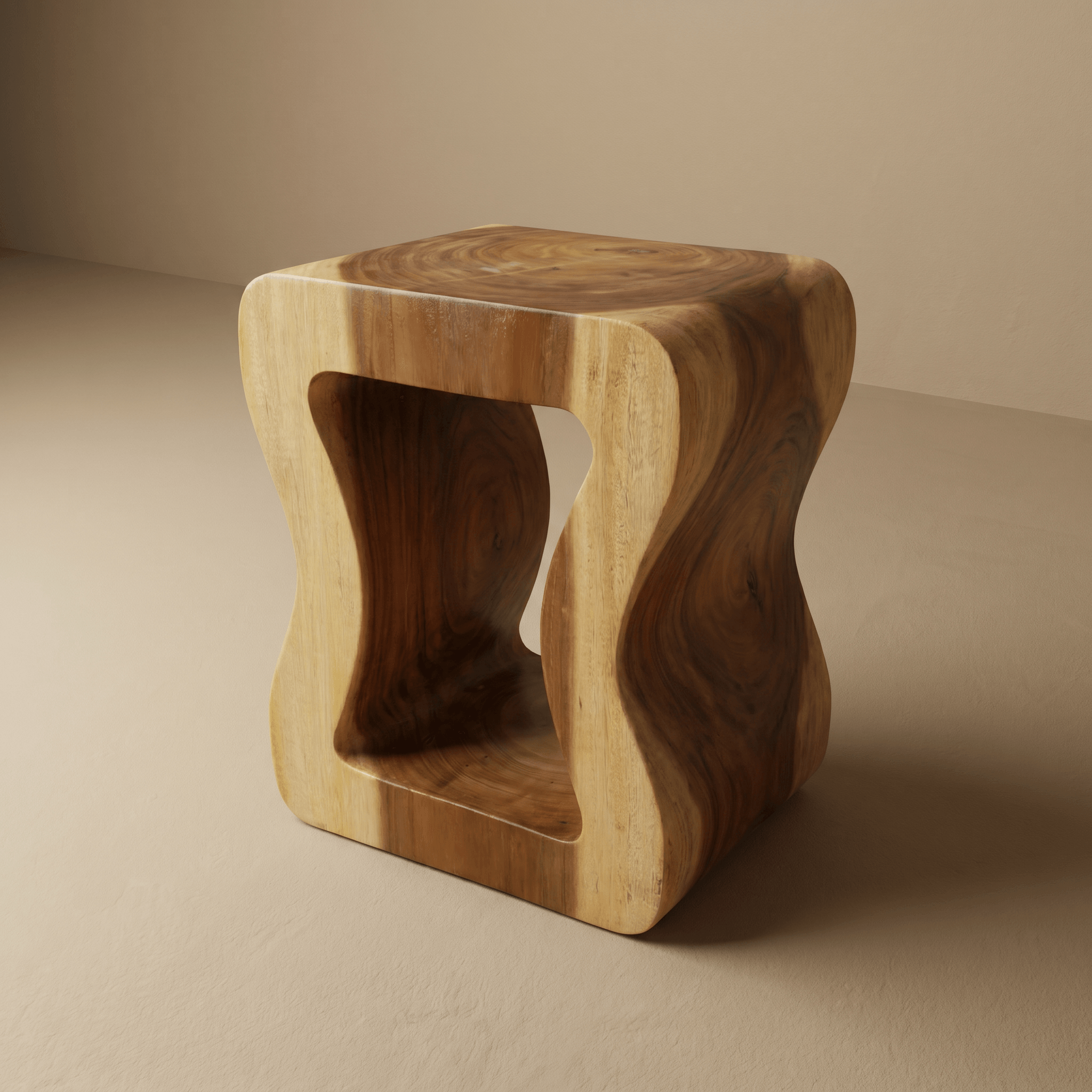
Finally, the material. It's the piece you touch most and look at up close: solid wood with real grain makes complete sense here, where veneered board is quickly found out. Choose a piece where every copy is unique — it won't just furnish a corner, it will inhabit it.
Five temperaments, a single block
TANAH, ASA, NAGA, OMBAK, WAKTU: five solid suar accent pieces, hand-carved in Jepara. No two are ever identical.
Meet all five