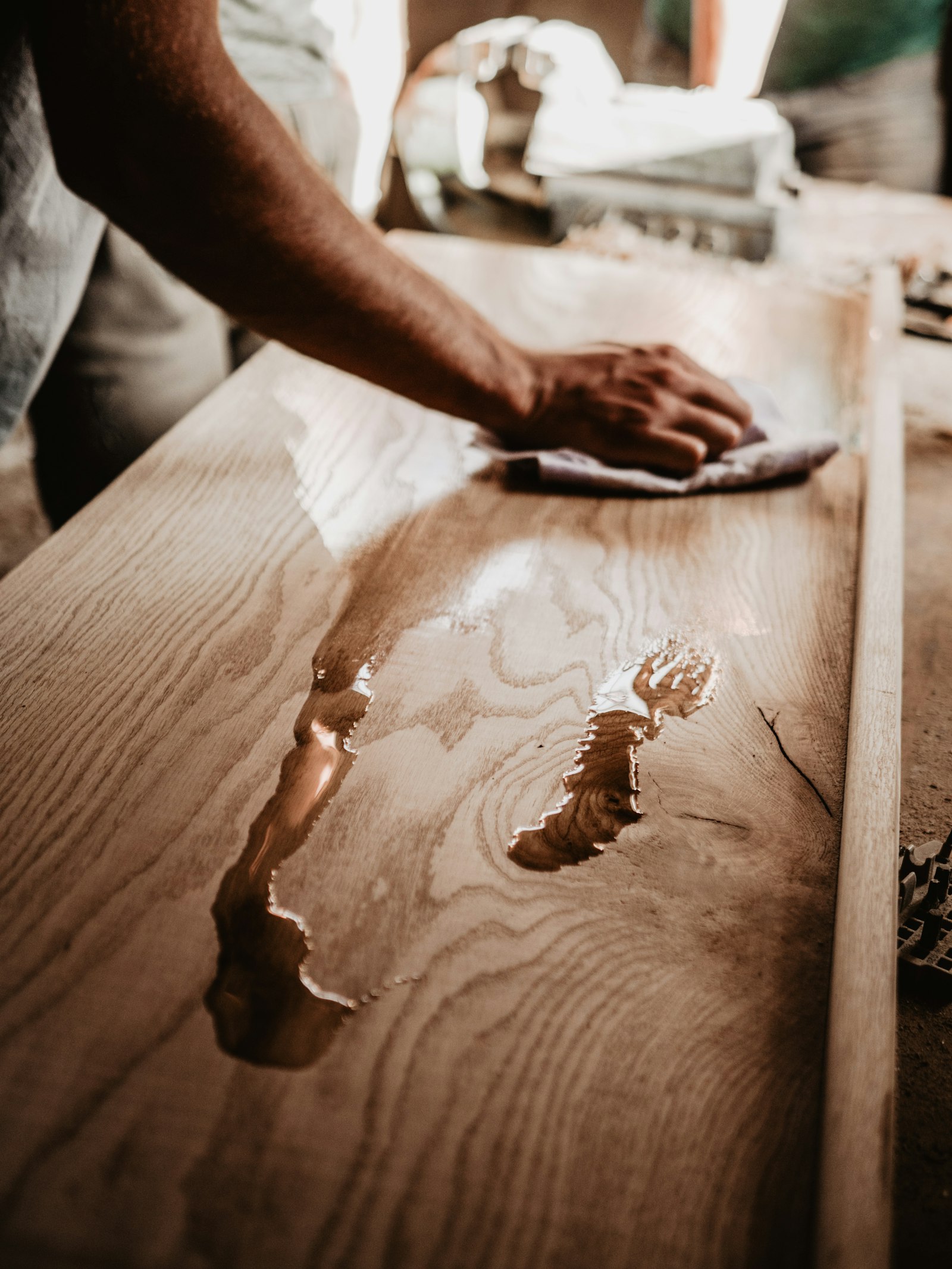
Veneer or solid: how to spot real wood furniture
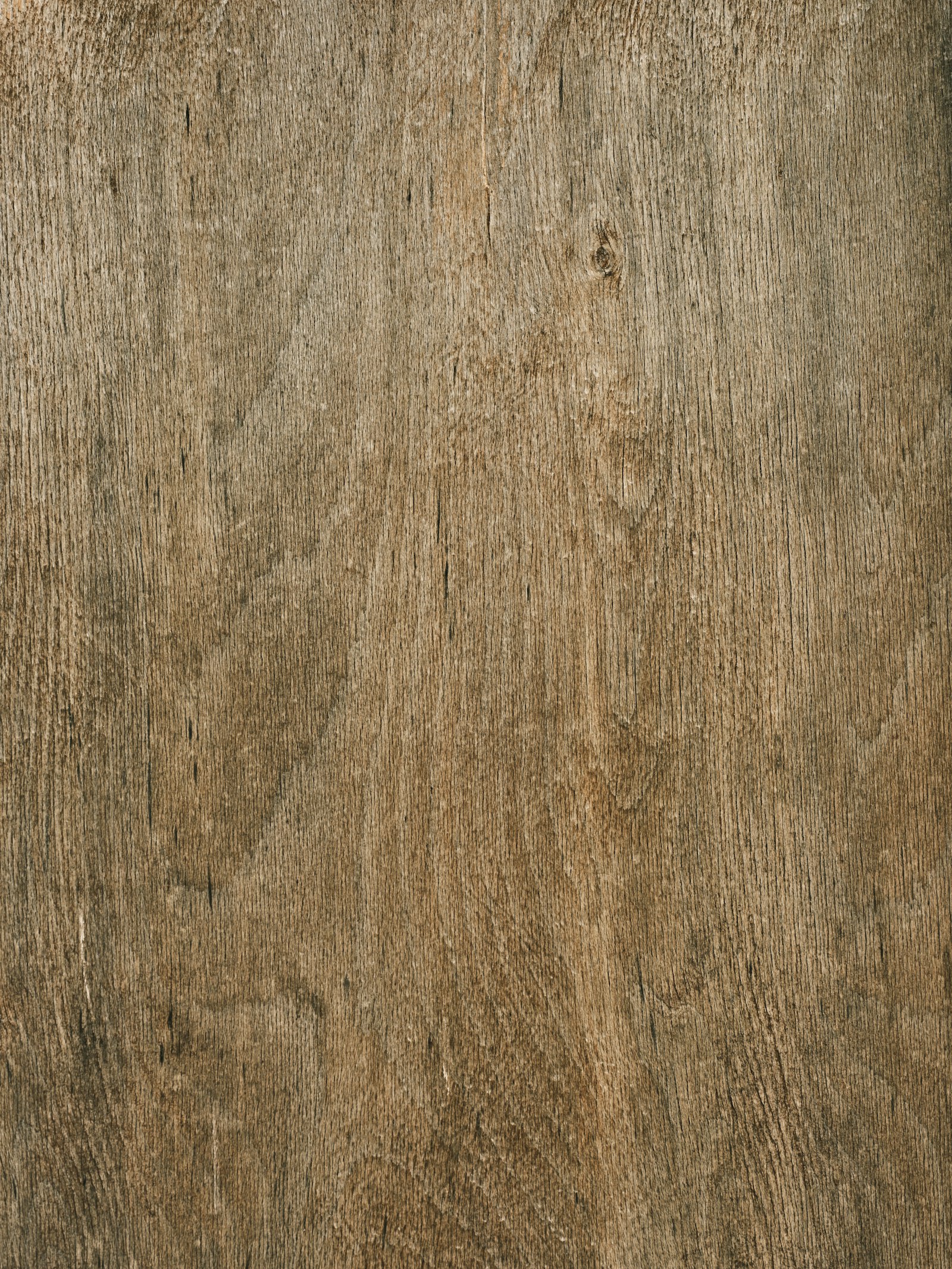
“Solid wood” has become such a widespread selling point that it sometimes appears on furniture containing almost none. Veneered fibreboard, “oak effect”, printed grain photos: there's a whole vocabulary for saying wood without using much of it. Here's how to tell the difference, in a shop or online.
First reflex: follow the grain. On solid wood, the figure continues from one face to the next — the grain of the top dives over the edge and reappears, coherent, underneath. On veneer, the pattern stops dead at the edge, or abruptly changes direction. A veneered edge also betrays itself with a thin applied strip, sometimes lifting at the corners.
Weight, sound, imperfections
Solid wood is heavy — lift a corner and you'll know quickly. Tapped with a finger, it gives a full, dull sound, where a hollow carcass sounds like cardboard. And paradoxically, look for flaws: a knot, a shift in tone, an irregular grain are excellent news. A perfectly regular wood pattern, repeating identically from one drawer to the next, is a printed pattern.
“Perfect regularity is the factory's signature; irregularity is the tree's.”
Online, read the spec sheet rather than the title. “Oak-veneered MDF top” means fibreboard. Beware of vague wording — “engineered wood”, “wood look”, “oak finish”. A solid-wood seller spells it out: the species, the origin, and often the weight, which they have no reason to hide.
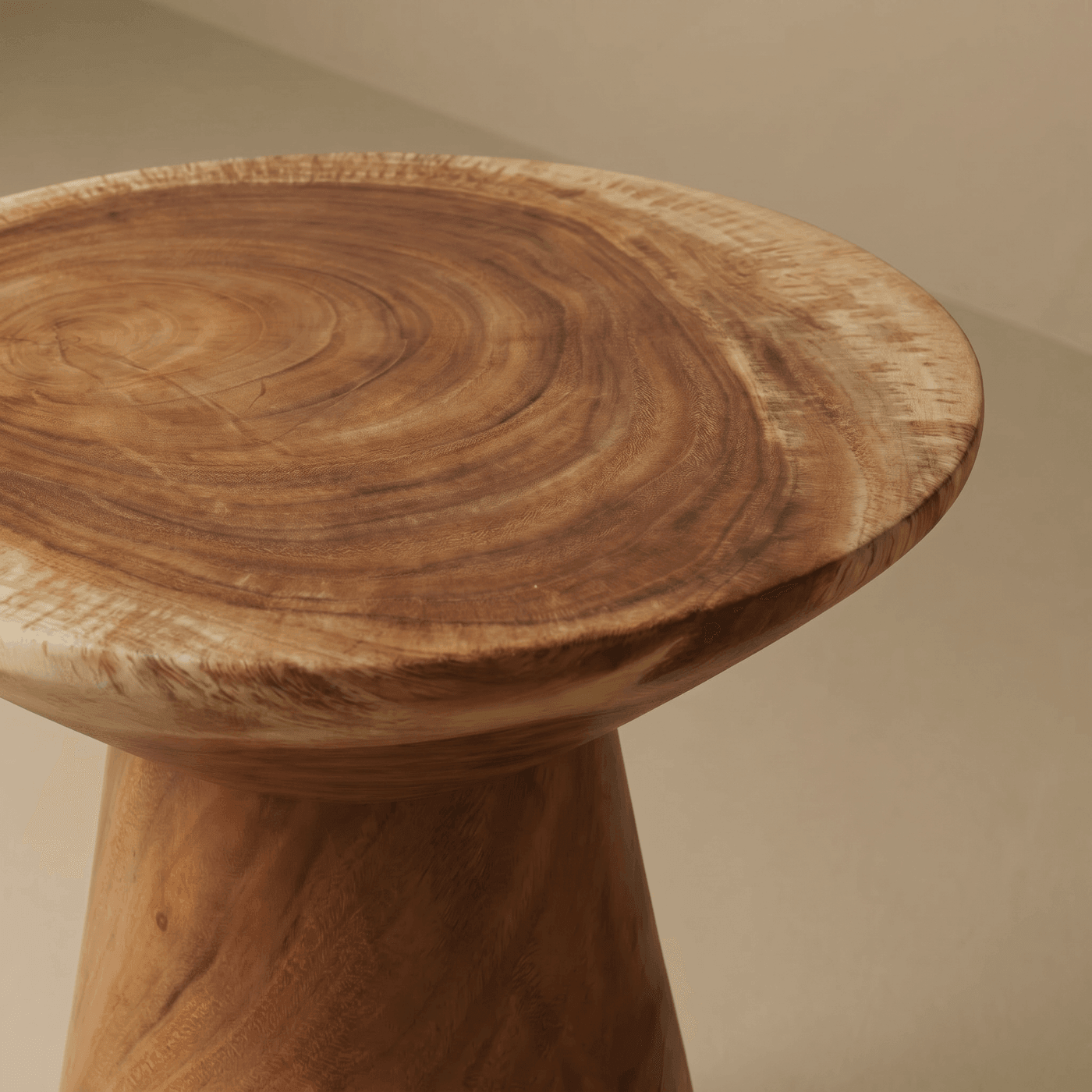
Why does it matter? Because solid wood can be sanded, re-oiled and repaired — it survives house moves and decades. Veneered board doesn't survive its first deep scratch. At purchase the price gap is real; spread over years of use, it almost always reverses.
Solid wood, no asterisk
At Maison Miraku, every piece is carved from a block of solid suar or teak — species, dimensions and weight stated on every product page.
See the pieces