The anti fast furniture: choosing pieces for life
After fast fashion, fast furniture: furniture has become a consumable bought fast, assembled grumbling, and abandoned at the next house move. In the United States alone, close to twelve million tonnes of furniture end up in landfill every year. The alternative isn't deprivation — it's changing your unit of measurement.
How did we get here? Crushed prices that impose particleboard, “collections” refreshed at fashion's pace, carcasses that don't survive two disassemblies, and an implicit promise: this furniture isn't made to follow you, it's made to be replaced. The business model rests on your next purchase, not on the lifespan of the last one.
What disposable really costs
The ecological cost first: particleboard and its glues, barely recyclable, repeated transport with every replacement, and tonnes buried. The financial cost next: buying three times means paying three times — delivery and time included. And a quieter cost: the impossibility of attachment. You don't hand down an interchangeable carcass; you tell no stories about it.
“The cheapest piece of furniture is the one you only buy once.”
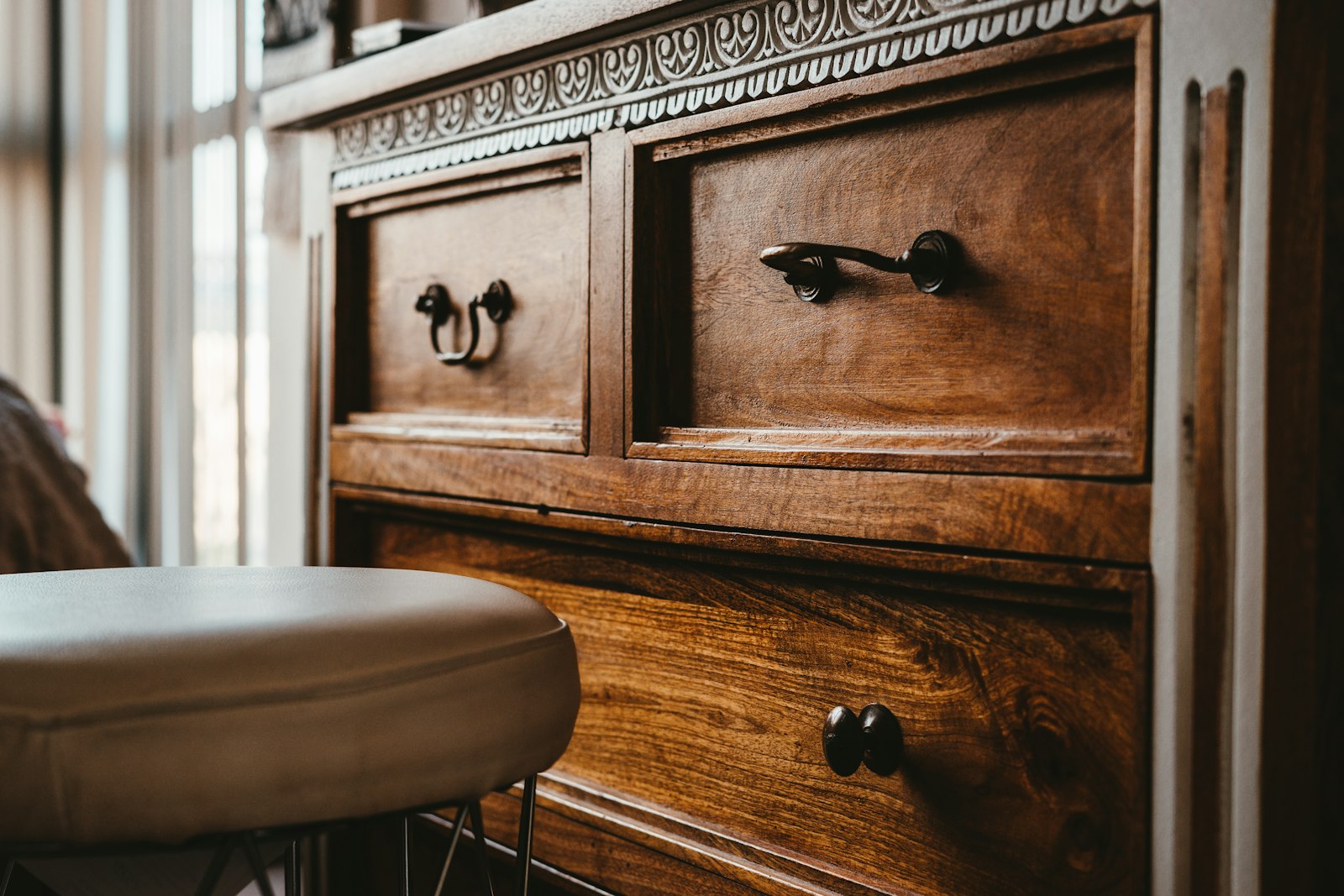
The alternative fits in three words: repairable, adaptable, transmissible. Oiled solid wood furniture gets sanded and re-oiled locally instead of replaced. A compact accent piece changes roles over the years — side table, bedside, plant stand — instead of going obsolete with the room it furnished. And when the day comes, it changes homes instead of hitting the skip. Start small: replace ONE disposable piece with a lasting one, and see.

Our side of the contract: strictly legal, traced timber, pieces carved to last decades and repairable indefinitely, forms that follow no season. Yours, if you accept it: keep your objects a long time. It is, by far, furniture's simplest ecological act.
The opposite of disposable
Traced solid wood, hand-carved, repairable forever: discover how we make things — and why.
Read our vision