Dull or greyed wood: bringing an oiled piece back to life
A top that's lost its glow, a tone gone flat, almost grey: the piece looks worn out, but it's simply thirsty. The dulling of oiled wood isn't wear — it's a lack, and it can be filled. Count on an hour, a cloth and a bottle of oil.
Why does wood dull? Three culprits, often accomplices: UV light, washing out the tone season after season; dry air, draining the fibre of its oil; and build-up — fine dust and spray silicones accumulated into a lifeless veil. Grey is the next stage: a surface so bare it oxidises. Nothing irreversible either way.
The revival, step by step
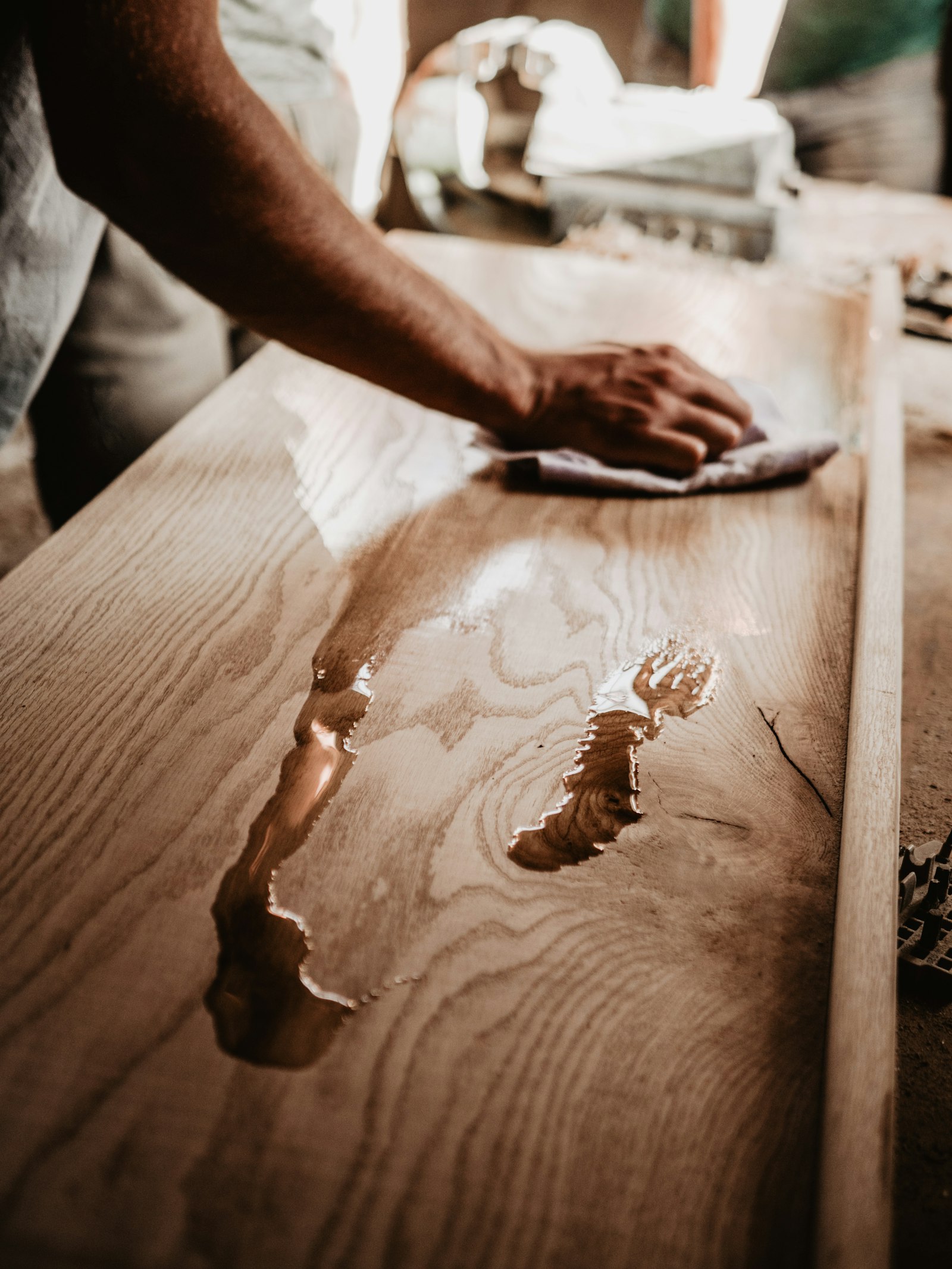
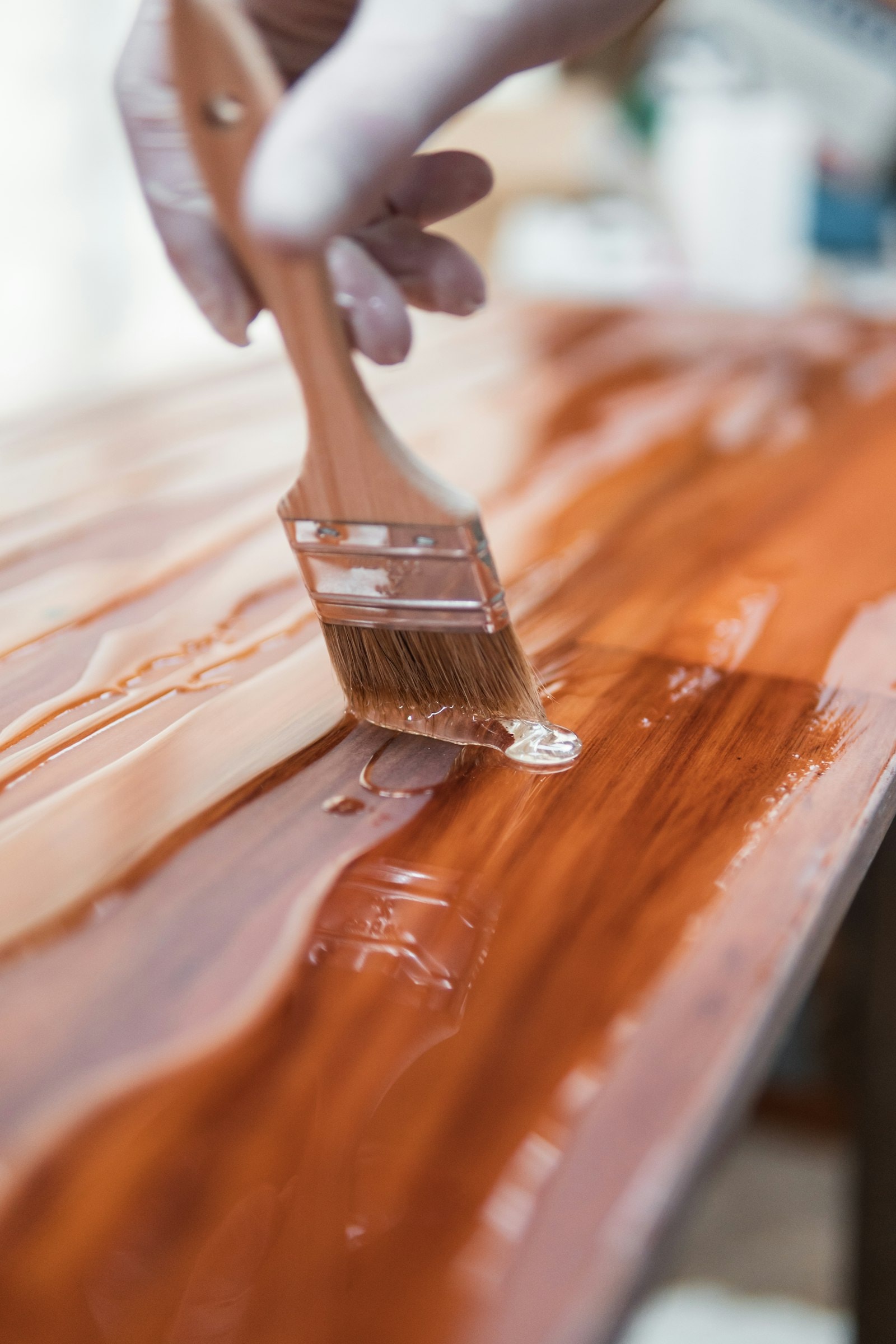
Step 1: dust thoroughly, then clean with well-diluted black soap and a wrung-out cloth, drying immediately — start from a healthy surface. Step 2: if the wood is greyed or rough, a very light sanding at 320 grit, along the grain, wakes the fibre; careful dusting follows. Step 3: interior wood oil, in a thin coat, applied with a lint-free cloth along the grain.
“You don't repaint tired wood: you quench its thirst.”
Let it soak twenty minutes, wipe off all the excess, and judge the next day: on very thirsty wood, a second thin coat beats a thick first one. Finish with a gentle buff. The before/after is spectacular but honest: the tone warms up, the grain steps forward, the satin returns — the wood doesn't become new, it becomes itself again.
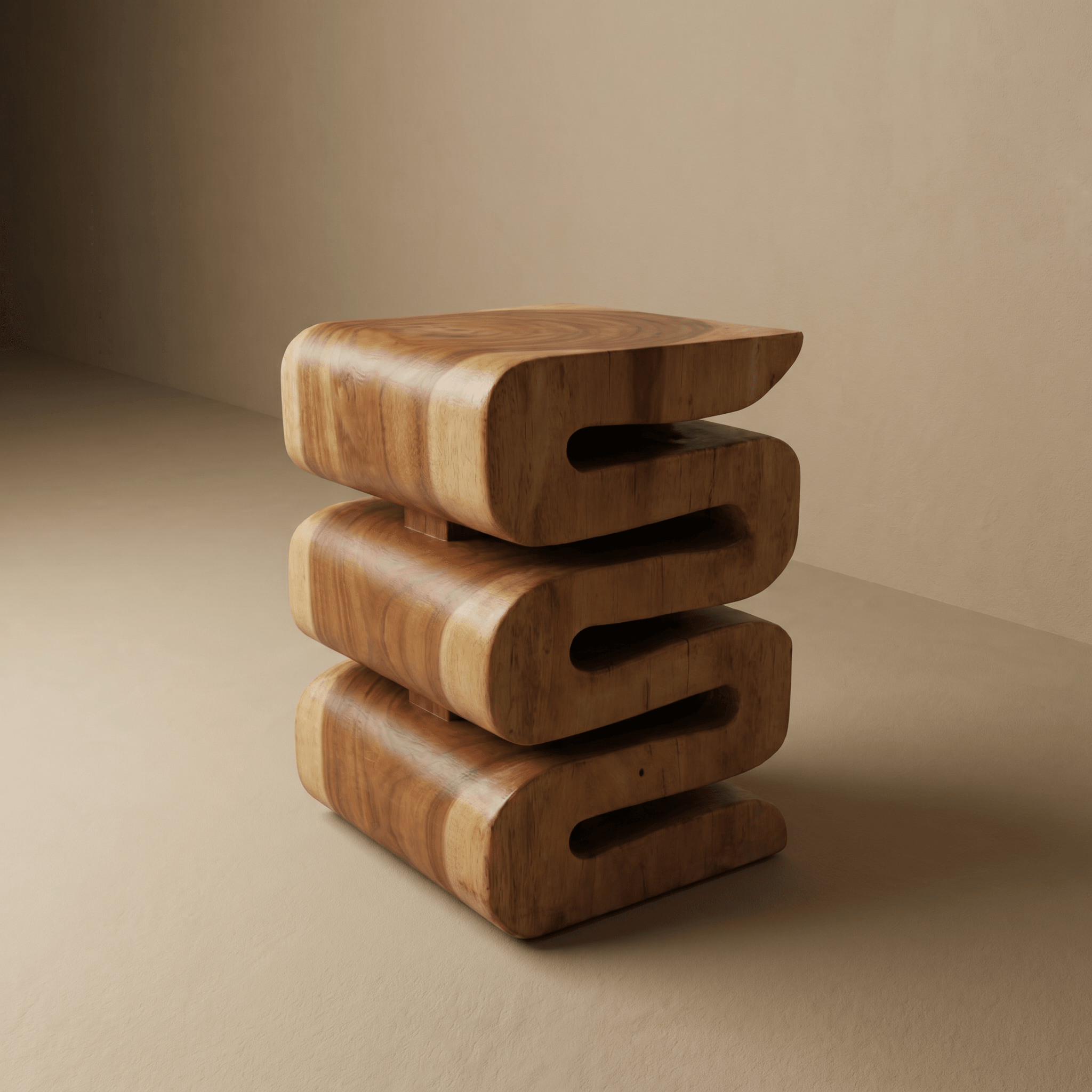
To make the glow last: oil once or twice a year, silicones kept away, and a sheer curtain if the sun hits hard. Regularly fed oiled wood simply stops dulling — it deepens. It's one of solid wood's finest traits: it doesn't wear out, it matures.
Pieces that mature well
Solid suar and teak, hand-oiled in Jepara: pieces designed to deepen year after year.
Discover the collection