Cleaning wooden furniture: the products to avoid at all costs
The cleaning aisle of a supermarket would have you believe wooden furniture demands an arsenal. It's the opposite: solid wood needs almost nothing, and half of what's sold for it does harm. Here's the blacklist — and the minimalist routine that truly suffices.
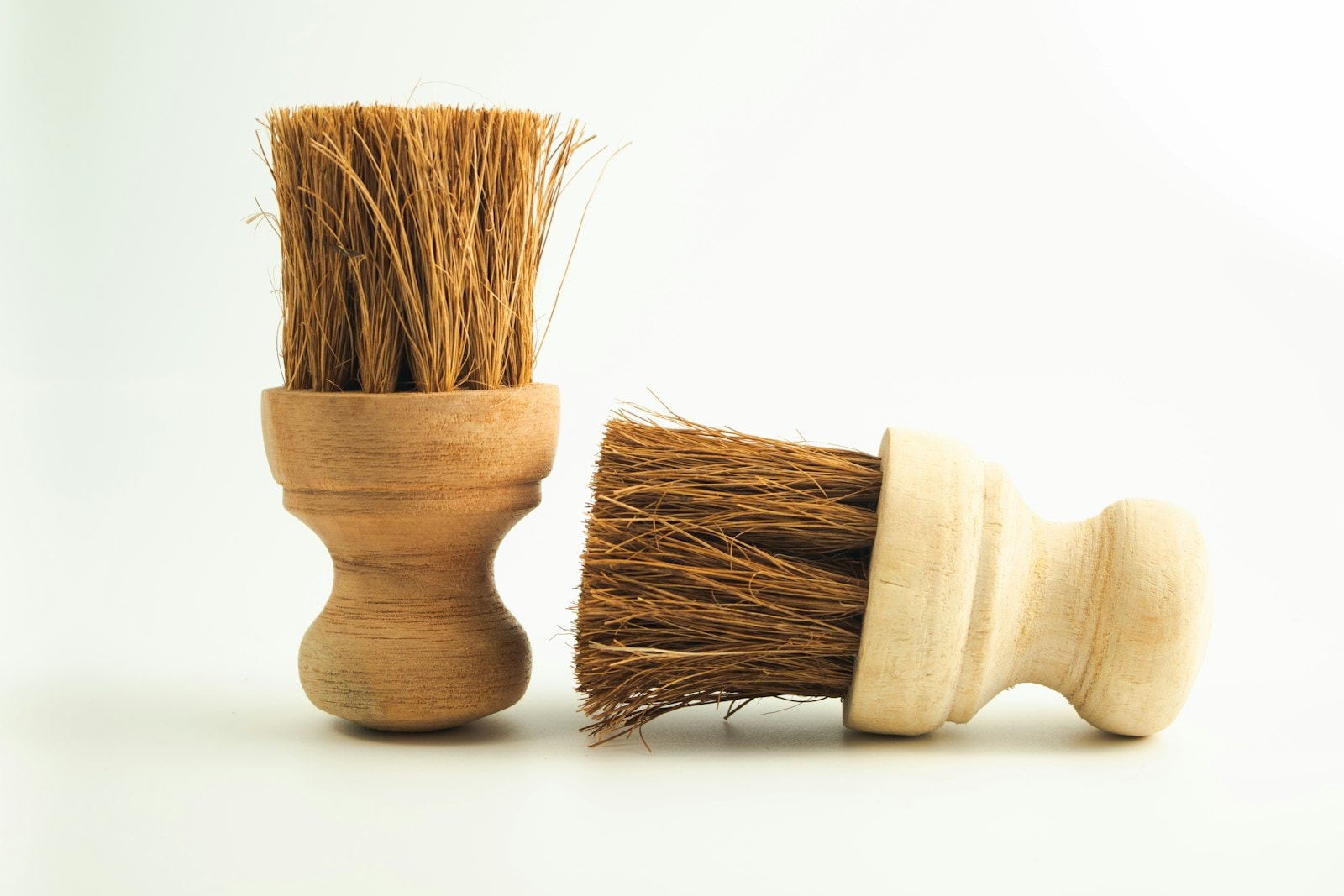
To ban, in order of damage: silicone dusting sprays, which clog oiled wood layer after layer and compromise any future re-oiling; neat vinegar, whose acidity strips the finish and greys the fibre; ammonia all-purpose cleaners, too harsh for any natural finish; green-side scouring sponges, which micro-scratch in one pass; and abundant water — a generous mopping swells the fibre through pores and edges.
The 30-second routine
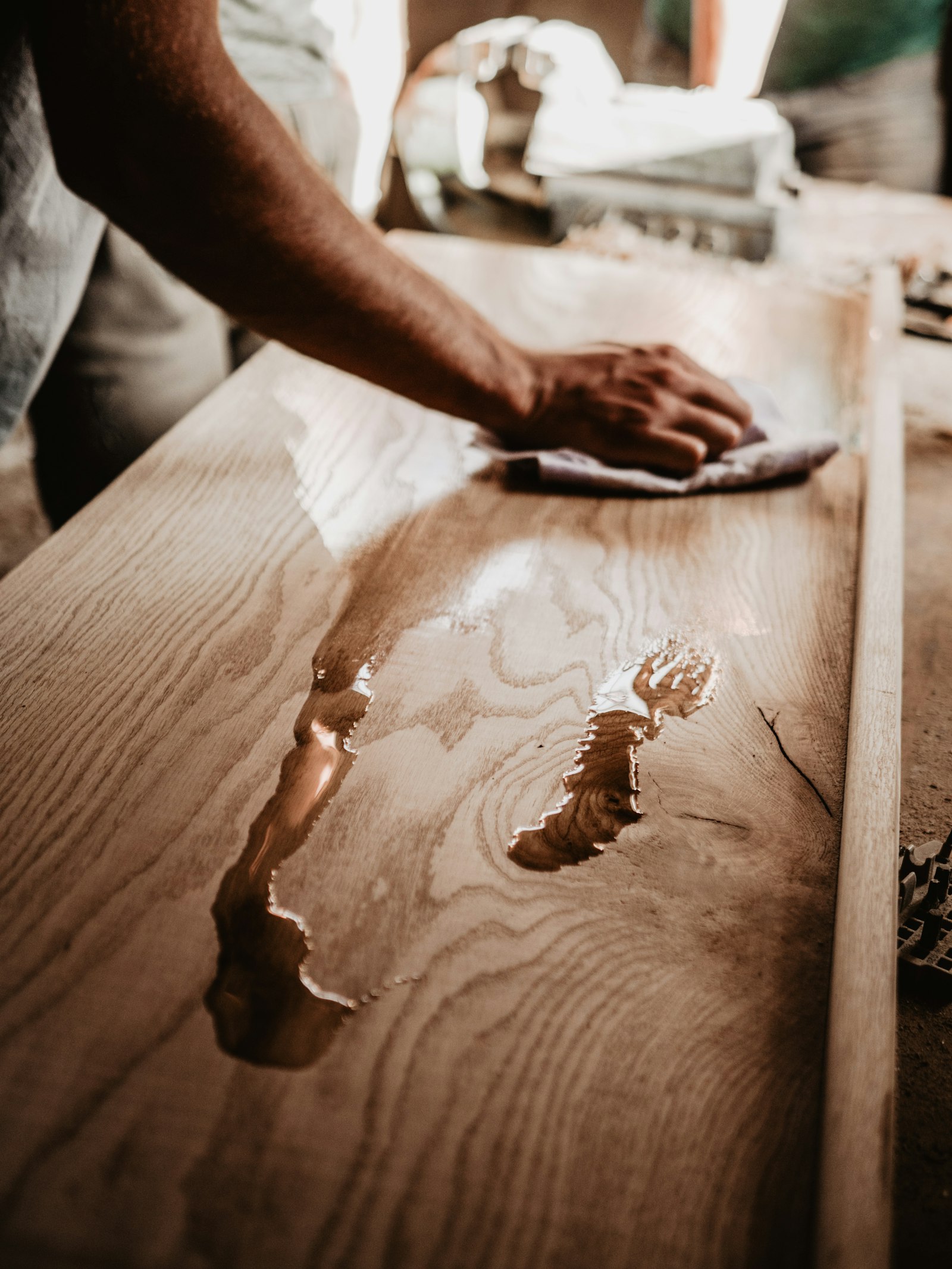
What suffices: a soft dry cloth, once a week, along the grain. A mark? Barely damp cloth, then immediate dry wipe. A real spring clean? Well-diluted black soap, a wrung-out cloth, dried straight away. That's all. The rest of the work is done by the yearly oil — not by weekly products.
“The best wood-care product is a dry cloth. The rest is marketing.”
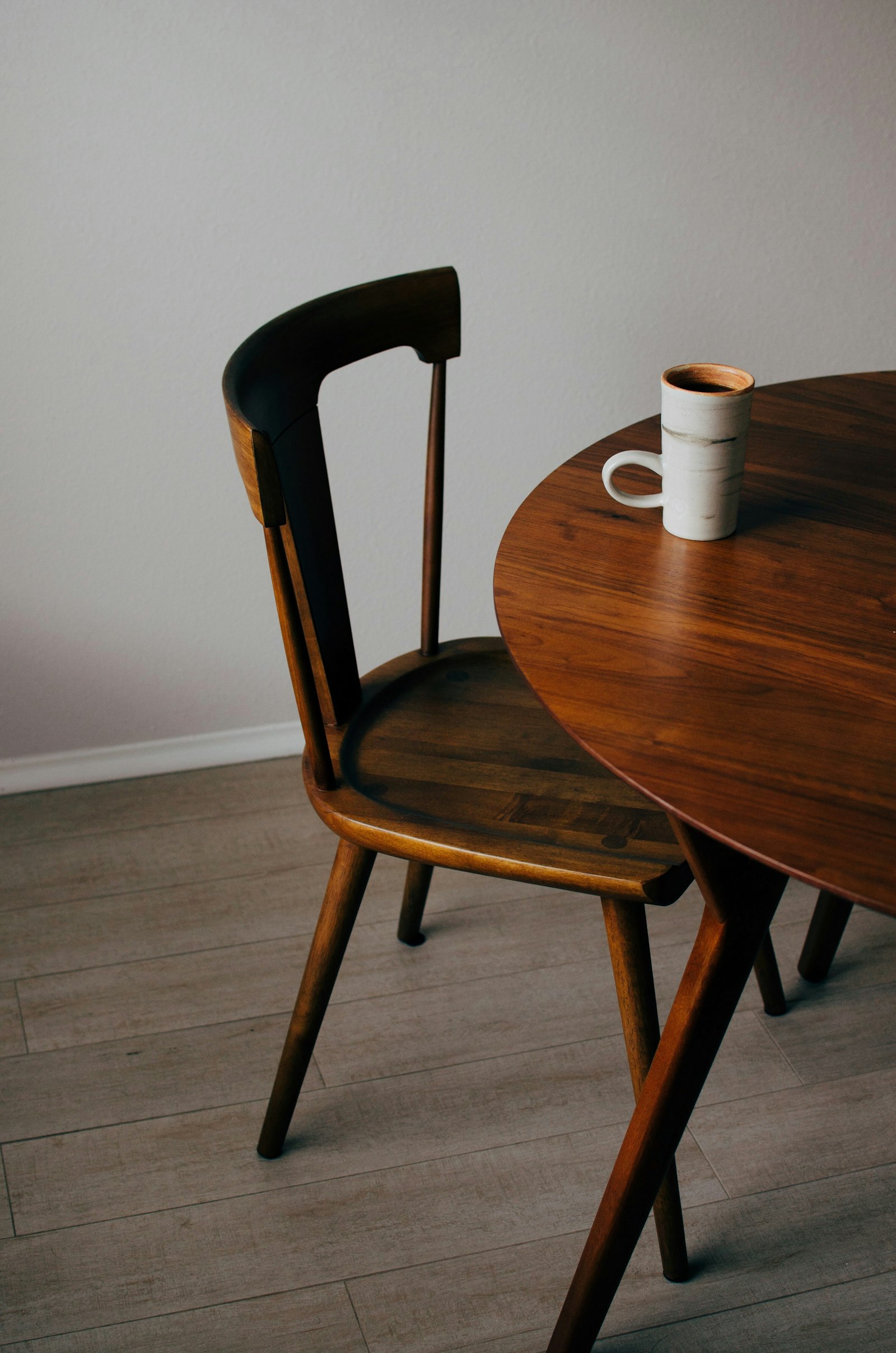
Why are the shelves full, then? Because silicones give instant shine — the illusion of clean. But that shine is a plastic film that builds up, attracts dust and veils the material. Healthy oiled wood is matte and satin, warm under the hand: exactly how our pieces look leaving the workshop, and never achievable from a spray can.
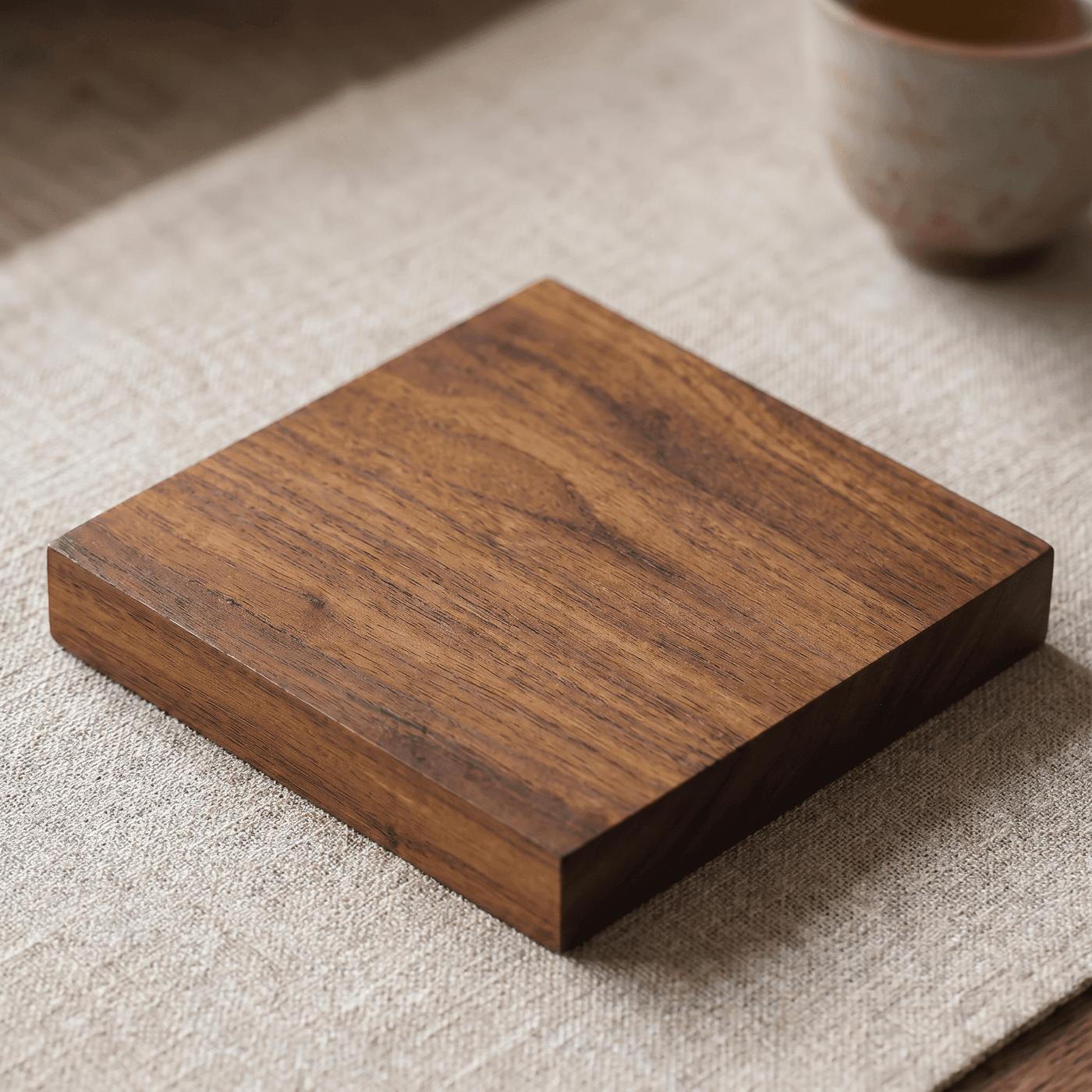
For accidents, each case has its own article: the white ring left by a glass, the scratch, dulled wood that lost its glow. But the ground rule never changes: fewer products, simple gestures, regularity. Wood forgives almost everything — provided you don't “help” it too much.
Keep it simple, like wood
Our solid suar and teak pieces are finished with natural oil: beautiful on next to nothing, repairable forever.
Discover the collection