Heating, winter and solid wood: how to prevent cracks

Every year, the same calendar: radiators come on in October, and the worried messages arrive in January — “a crack has appeared on my tabletop”. The heating season is the real test of solid wood furniture. Good news: it can be prepared for, and almost everything is won through prevention.
One word explains it all: hygroscopic. Wood constantly exchanges moisture with the surrounding air. Heating dries our homes brutally — humidity, comfortable around 50%, can drop below 30% near a radiator. The wood then gives up its water and contracts; if it does so too fast or unevenly, the tension releases as a crack.
The three winter mistakes
First: pushing furniture against the radiator or stove. Direct heat dries one side faster than the other — the perfect crack scenario. Fifty centimetres of distance change everything. Second: never re-humidified air; aim for 45–60% humidity — plants, radiator humidifiers or a simple bowl of water do the job, and a hygrometer costs about ten euros. Third: moving a piece from a cold garage to an overheated living room overnight — brutal transitions are worse than cold itself.
“Wood doesn't fear winter: it fears dry, brutal winters.”
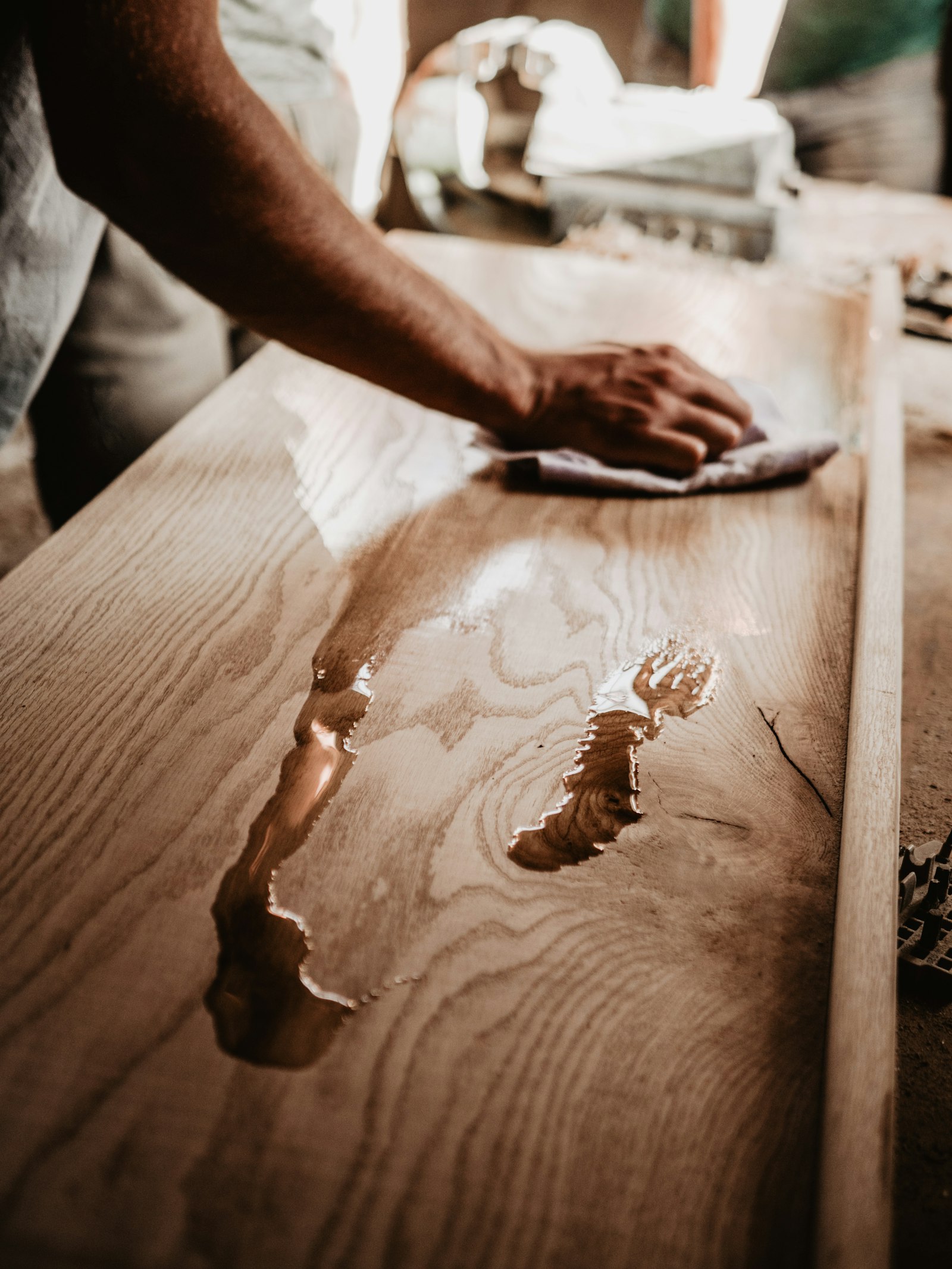
The autumn routine takes one gesture: a thin coat of oil before the heating goes on. Oil feeds the fibre and slows moisture exchange — the wood glides through the season instead of enduring it. Take the opportunity to move pieces away from heat sources and check air can flow around them.
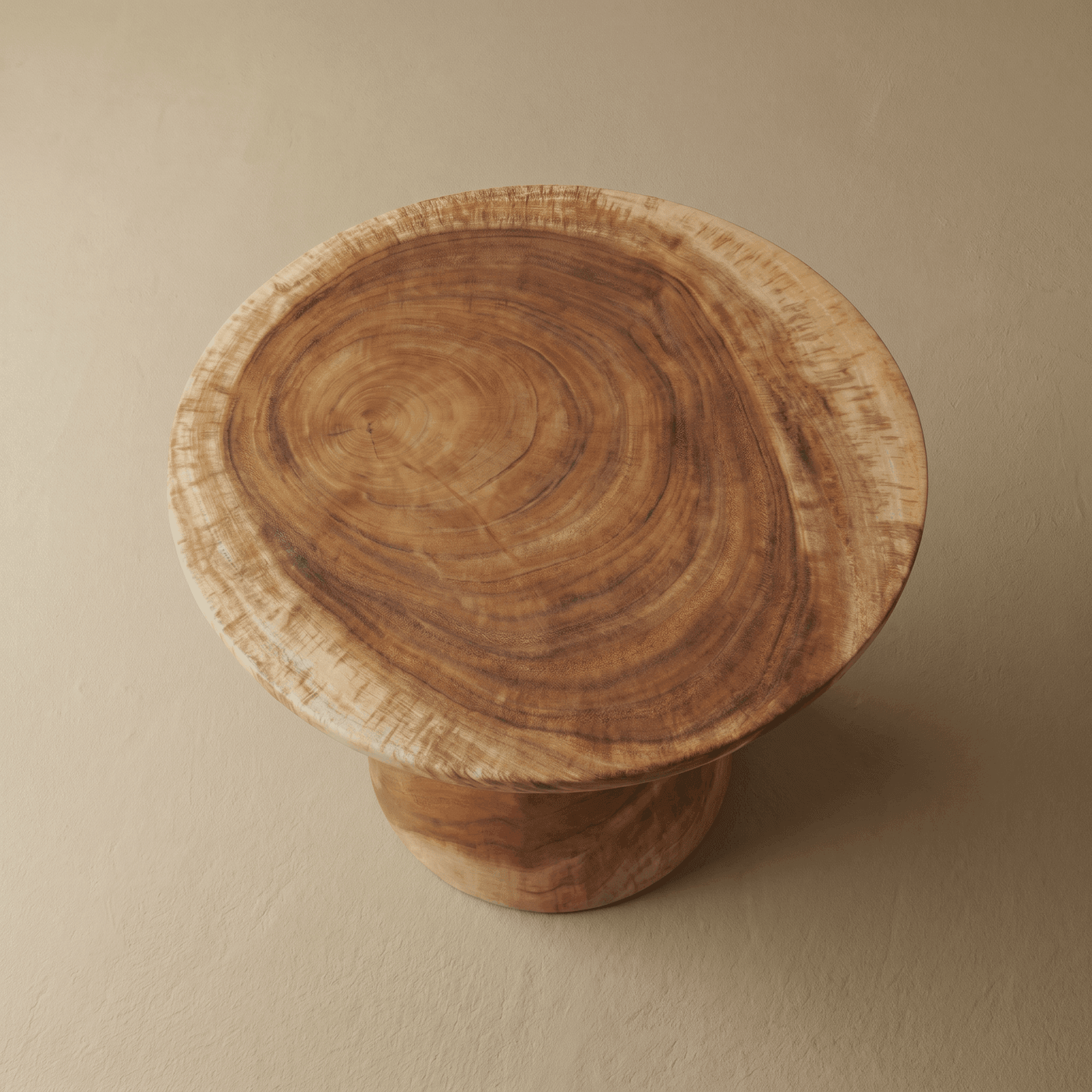
Should you worry, then? No. A piece carved from the mass and dried at length — like ours — moves little. The small surface checks that may appear are part of solid wood's life: they breathe with the seasons and usually close on their own in spring.
A check has appeared: what now?
First: nothing. Note it, photograph it, and let a full season pass — most winter checks close again when humidity rises. It's the material breathing, not damage. Resist the urge to fill it right away: filler applied to a check that's going to close will work against the wood.
If, after a full cycle, the check stays open and catches the hand, a tinted hard wax can fill it discreetly — or leave it, the signature of living wood. And in the rare case of a true structural crack, one that goes through and evolves fast: write to us with a photo and we'll look together.
Unsure about your piece?
A check that worries you, a care question: send us a photo, we're happy to answer — whether the piece is ours or not.
Contact us