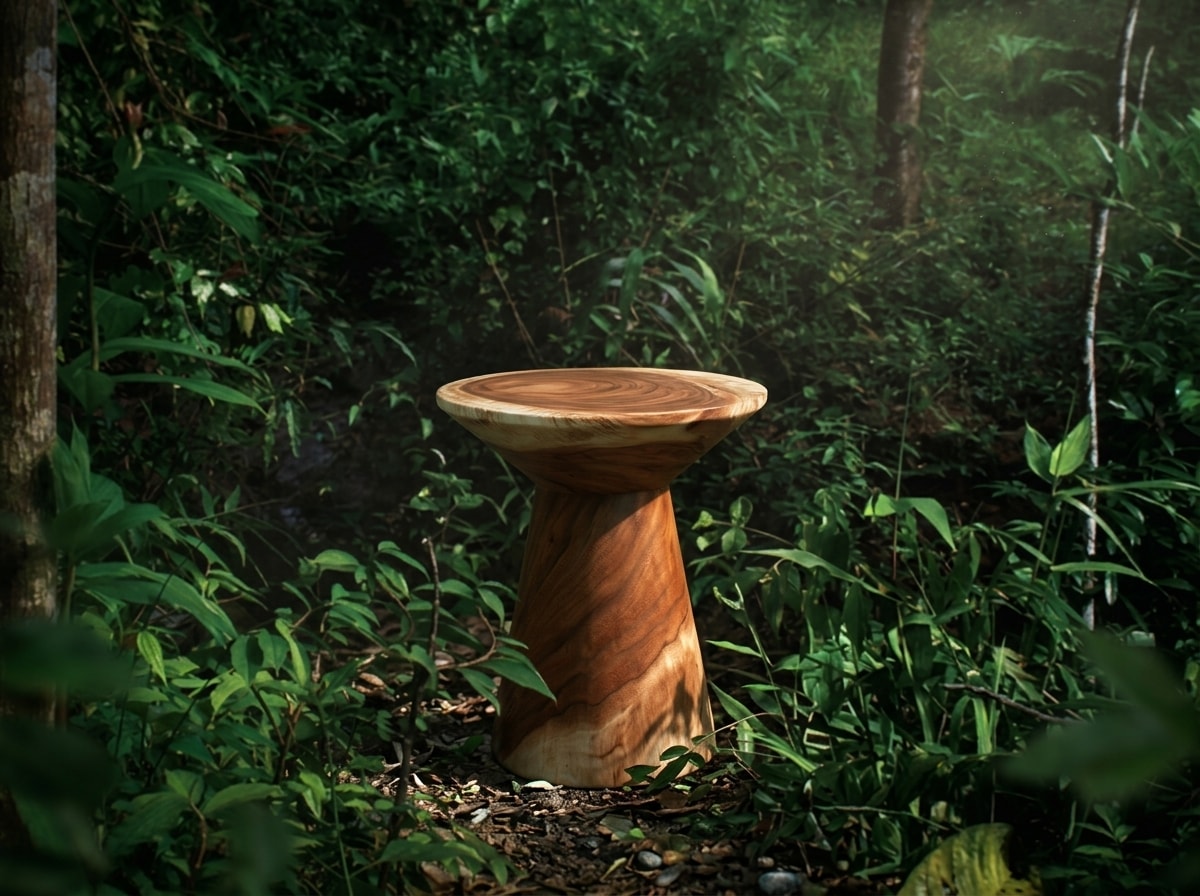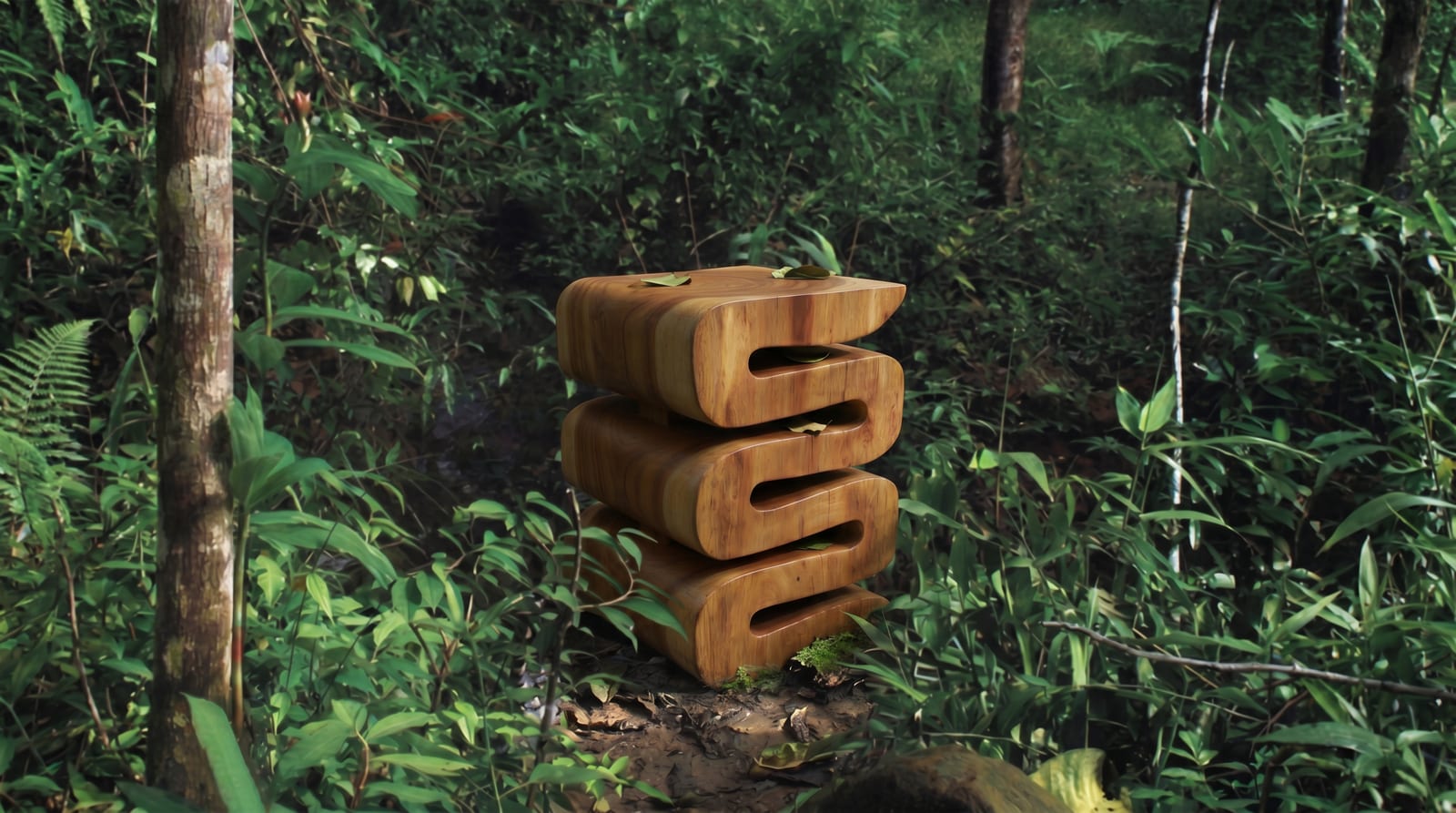
Jepara, capital of wood: where our pieces are born
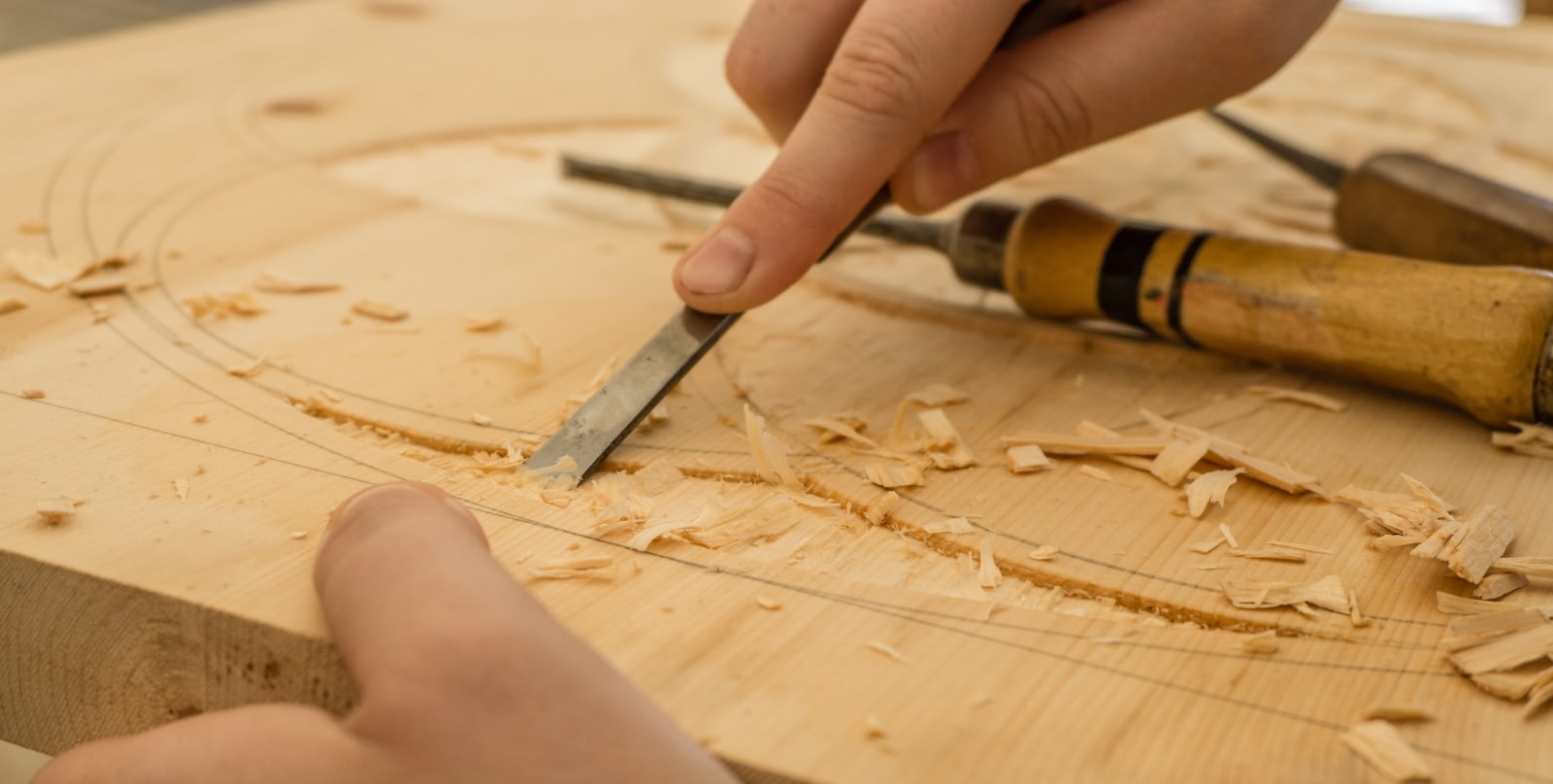
On the north coast of Java, between rice fields and sea, there is a town where wood is a mother tongue: Jepara. People have carved here for centuries, parent to child, to the point that Indonesia calls it “the carving town”. This is where every Maison Miraku piece is born.
The tradition is at once old and alive. Carved ornament — ukir — has dressed Javanese houses, mosques and furniture for generations; in the early 20th century Kartini, Jepara's most famous daughter, helped make its artisans' work known far beyond the island. To this day, whole neighbourhoods live from wood: sawmills here, carvers there, finishers further on.
What “handmade in Jepara” means
Concretely? Hands trained for years before touching a piece meant for sale. The gesture first, the machine as backup: a slab of suar or teak is read — grain direction, knots, tensions — before it is worked. Each piece carved from the mass goes through dozens of hours of roughing, carving, successive sandings and oiling. That time can't be offshored or imitated.
“In Jepara, you don't learn carving at school: you breathe it at home.”
Our story with the town began the proper way: in person, during a long journey through Indonesia, meeting workshops before choosing the one to work with directly. One non-negotiable requirement guided that choice: strictly legal, traced timber — an SVLK-certified chain, shipments under FLEGT licences — because the beauty of the gesture is worth nothing if the material is taken from the forest without right.
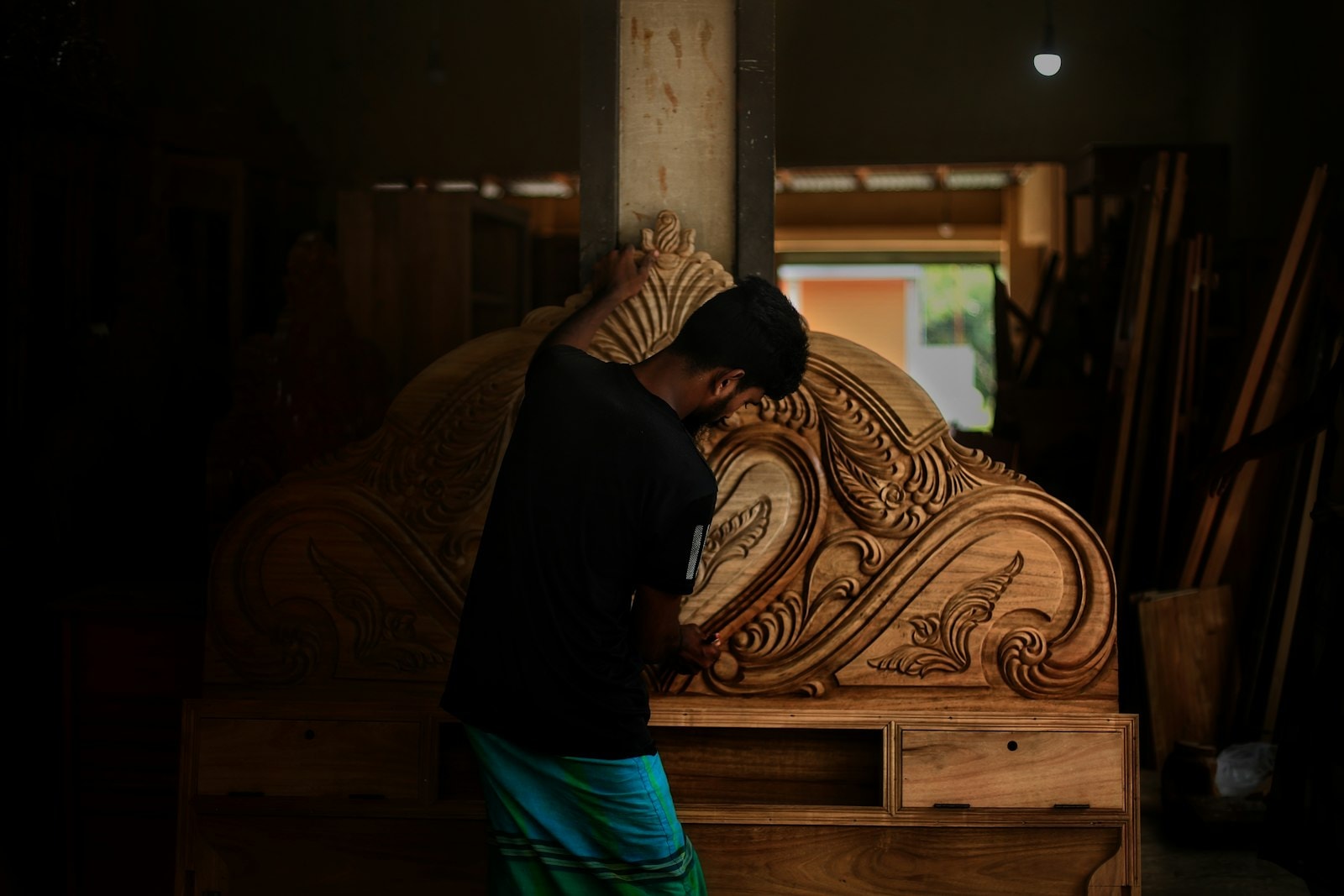
Choosing a piece born in Jepara keeps that transmission alive — and brings home an object no factory can replicate: a unique grain, hours of gestures, a story that begins under a Javanese tree and continues in your living room.
From the journey to the workshop
How a long journey through Indonesia became Maison Miraku: read the full story here.
Read our vision